
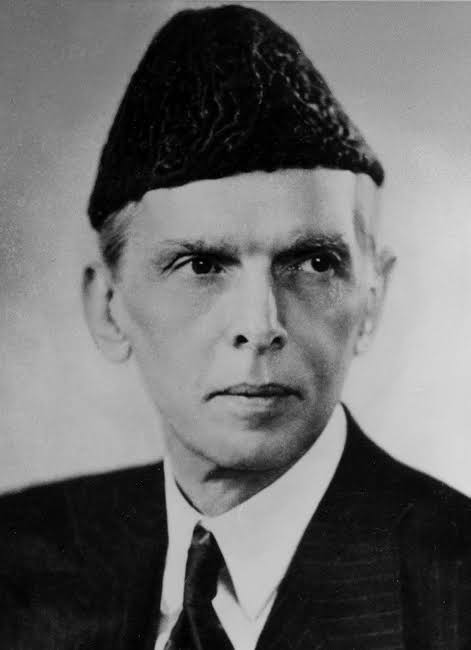
Quaid-e-Azam Muhammad Ali Jinnah (1876-1948) was a prominent political leader and statesman who played a pivotal role in the creation of Pakistan. He is widely regarded as the founder of Pakistan and served as the country’s first Governor-General until his death.
Jinnah was born on December 25, 1876, in Karachi, which was then a part of British India. He studied law in England and returned to India to practice as a barrister. Initially, Jinnah was involved in Indian politics and was a member of the Indian National Congress, which aimed for self-rule and representation for Indians within the British Raj.
However, Jinnah became disillusioned with the Congress and its approach to minority rights, particularly those of the Muslim community. He felt that Muslims needed a separate political entity to protect their interests and to establish a homeland where they could live in accordance with their own religious, cultural, and political values. As a result, he played a pivotal role in the creation of Pakistan as a separate nation for Muslims.
Jinnah’s leadership and negotiation skills were crucial during the partition of India in 1947, which resulted in the creation of two separate countries: India and Pakistan. Despite facing numerous challenges and communal violence during the partition, Jinnah worked tirelessly to establish a constitutional framework for Pakistan.
After the creation of Pakistan, Jinnah became the Governor-General, a position he held until his death on September 11, 1948. His vision for Pakistan was that it would be a democratic and inclusive state, where all citizens would have equal rights regardless of their religion, caste, or creed. He emphasized the importance of unity, faith, and discipline as guiding principles for the nation.
Jinnah’s legacy as a statesman and his contributions to the creation of Pakistan have made him a revered figure in the country’s history. He is often referred to as Quaid-e-Azam, which means “Great Leader” in Urdu. His speeches, writings, and political philosophy continue to inspire people in Pakistan and serve as a guiding force for the nation’s development.
 Web Solutions